
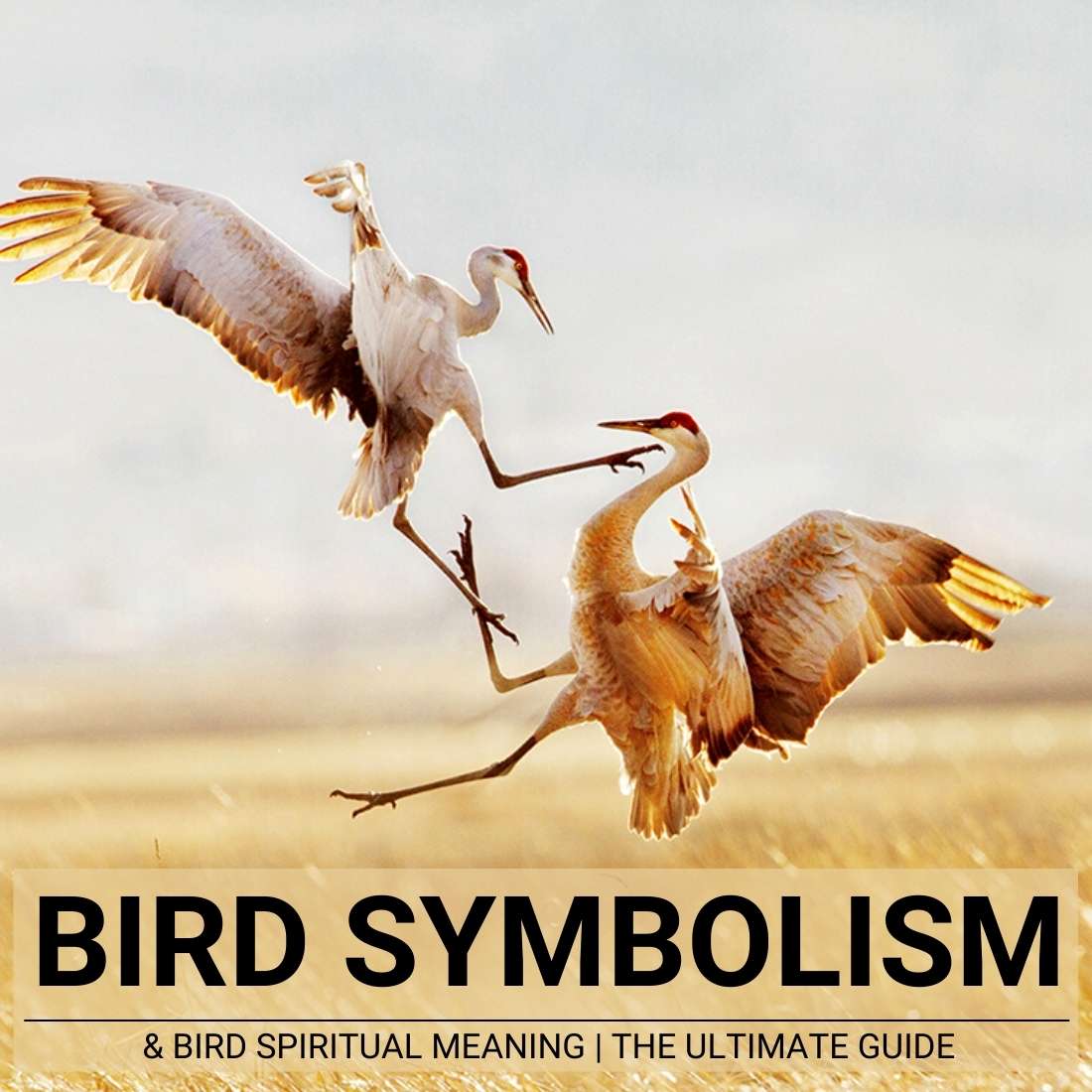
Birds near human spaces are read, in most traditions, as one of three things: a message crossing a threshold, a soul in transit, or a claim on your attention. These readings come from different places in history and aren’t saying the same thing. Which one fits depends entirely on which tradition you ask.
Key Takeaways
- Across Welsh, Korean, Japanese, Christian, and Roman traditions, birds near human spaces carry some form of communicative meaning — but what they communicate differs sharply by culture and species.
- Medieval Welsh tradition reads grouped birds in trees as markers of Otherworld thresholds; Joseon-period Korean folklore reads a magpie on a branch as joyful news arriving. They are not saying the same thing.
- The species and location of a bird visit shape its meaning more than the fact of visitation alone. A crow on a windowsill reads differently than a wren on a garden fence post.
- Repeated visitation carries more symbolic weight in Roman augury than a single sighting; in territorial bird behavior, repetition usually means the bird lives nearby.
- Grief-related bird visitations draw on the oldest layer of the folk record: birds as carriers of souls across a threshold.
What Is the Spiritual Meaning of Birds Visiting You?
In most traditions I have been able to trace with named sources, a bird visiting you is read as one of three things: a message from the living world passing through a threshold, a soul moving between states, or a signal that your attention is being asked for. Those three readings are not interchangeable. The messenger reading comes largely from Roman augury and Greek tradition. The soul reading comes from Indo-European world-tree mythology and later from Christian folk belief. The attention reading is more recent, showing up in Jungian and nature-writing frameworks from the twentieth century onward.
What I find worth saying plainly: none of these readings require you to believe anything supernatural to be useful. The oldest function of bird symbolism was practical attention. Roman augurs watched birds because birds were genuinely good at detecting threat, changes in weather, disruption at boundaries. The interpretive layer came after the observation. That sequence, animal first and meaning second, is the one I trust.
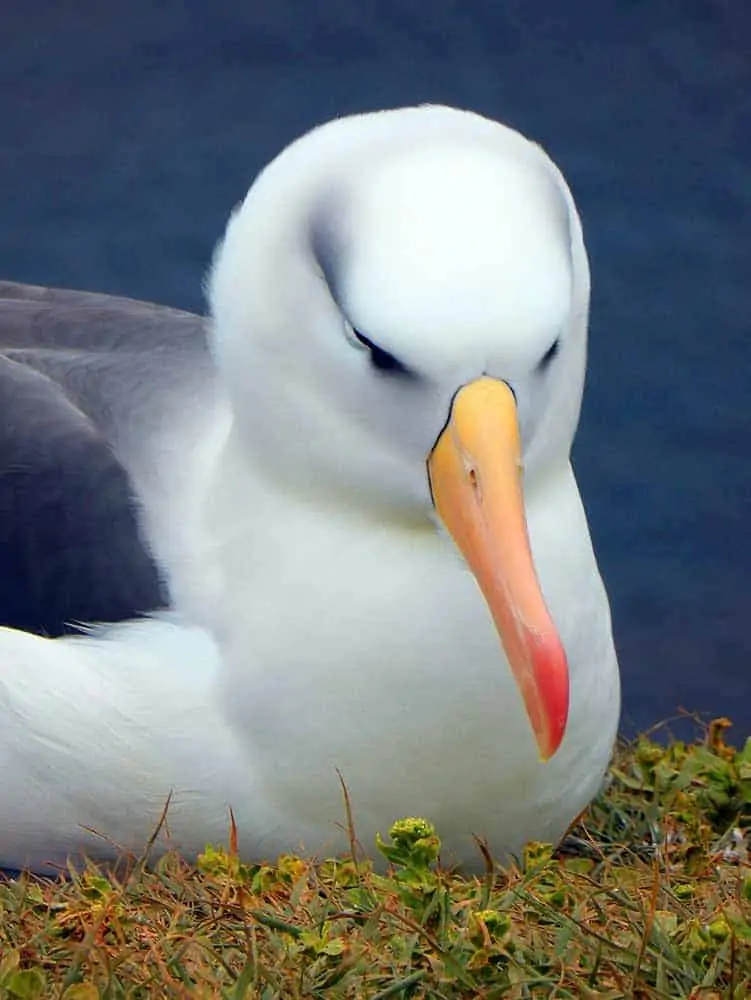
If a bird has visited you recently and you want a specific reading for that encounter, the location-specific section below goes into more detail. The bird in house meaning article covers interior visits at length, and mourning dove symbolism handles the most common grief-visitation species separately.
What Do Birds Symbolize Across World Cultures?
The common thread, across traditions that never shared a text, is flight itself. Birds move between earth and sky, they cross water, they appear and vanish without explanation. Every culture that built a symbolic vocabulary around birds anchored it in that fact. What varies is which direction the crossing goes and what it carries.
In ancient Egyptian belief, the ba, roughly the mobile soul, was depicted as a human-headed bird that left the body at death and returned to it. In Siberian shamanic traditions documented by Mircea Eliade in Shamanism: Archaic Techniques of Ecstasy (1951), the shaman’s spirit-helper frequently takes bird form because birds physically occupy all three layers of the world-tree cosmology: the roots (ground-feeding), the trunk (mid-canopy), the crown (soaring). In Homeric Greek, birds are the medium through which the gods communicate to mortals. Zeus sends eagles, Athena sends owls. But the bird is always a vehicle, never the deity itself.
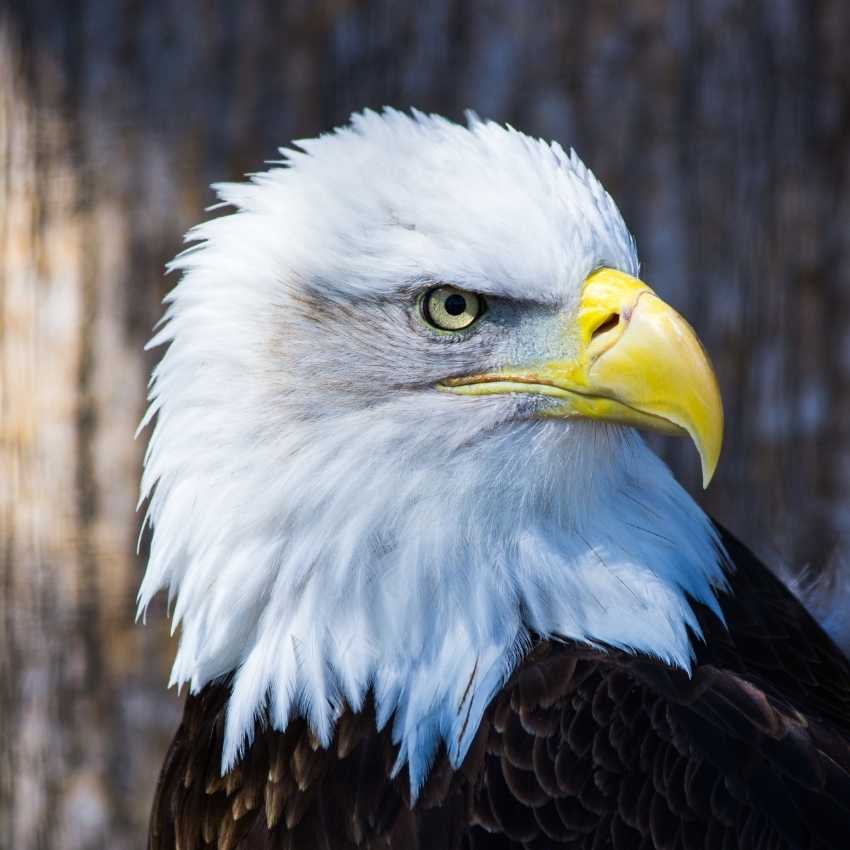
Soul-carrier. Messenger. Omen. Liminal figure. These four roles recur because they map onto what birds actually do: appear at edges, move quickly, cross water and sky, leave without explanation. The Horniman Museum’s survey of bird myth and lore documents this pattern across dozens of traditions without collapsing them into a single meaning, which is the right approach.
What the traditions disagree about is which boundary the bird is crossing, and in which direction. That disagreement is where the real information lives.
What Does Medieval Welsh Tradition Say About Birds Visiting You?
In medieval Welsh literature, birds near trees do not deliver good news. They mark the edge of something stranger than that.
In “Branwen Daughter of Llyr,” one of the four branches of the Mabinogion translated by Sioned Davies (Oxford University Press, 2007), the survivors of a catastrophic war sit for eighty years on the island of Gwales while supernatural birds sing to them from a nearby tree. The birds’ song suspends grief and time simultaneously. The men cannot remember their losses while the birds sing. When one of them opens the forbidden door facing Cornwall, the song stops, the grief returns, and the spell breaks. The birds in that scene are not messengers of comfort. They are the mechanism of enchantment itself, and their perch in the tree is the literal hinge between ordinary consciousness and the Otherworld.
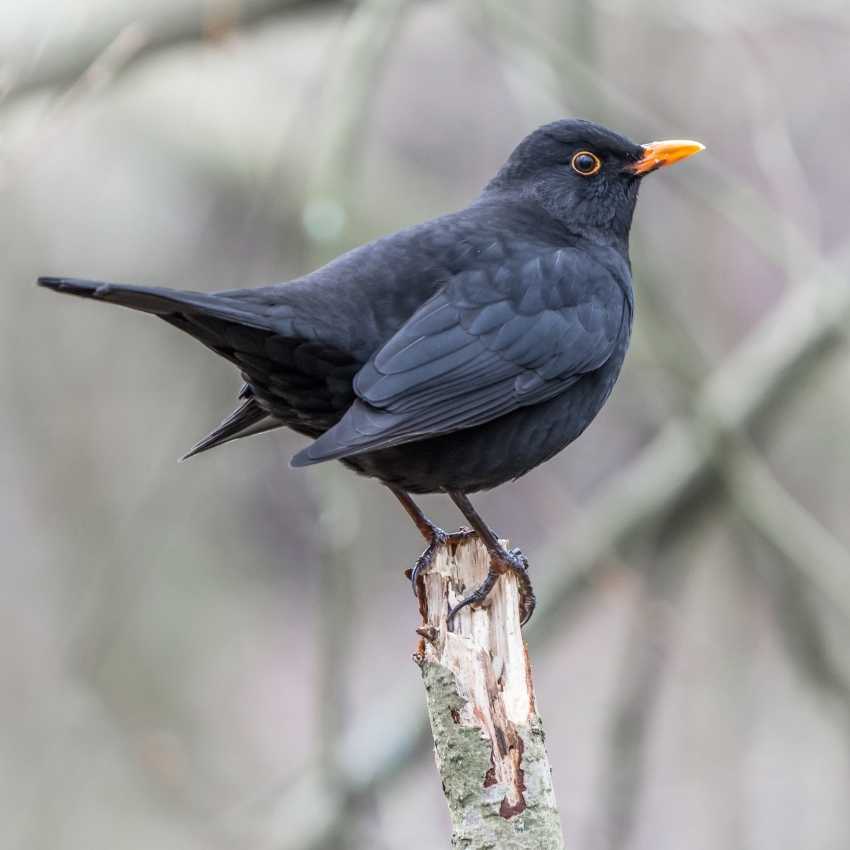
Welsh triad collections, compiled in the Trioedd Ynys Prydein, regularly structure uncanny portents in threes. The number three in that tradition carries weight not because of any numerological scheme but because Welsh oral tradition was organized in triadic formulas as a mnemonic structure. Three birds in a tree would signal, to a medieval Welsh audience, that something was being counted and that a threshold was near. Pay attention. Something has come to the edge.
I read this as the most honest available framing for an unsettling bird encounter. Not: here is your good news. But: something is waiting at the edge of your ordinary life, and it has been waiting there for a while.
What Does Japanese Kachō-ga Tradition Reveal About Birds on a Branch?
Oh, the names alone in Edo-period bird-and-flower painting: uguisu on plum blossom, suzume on bamboo, shijukara paired on a winter pine. Warbler, sparrow, great tit. The names carry the seasons inside them.
In Edo-period kacho-ga (bird-and-flower painting), small perching birds appear in odd-numbered groups on branches for reasons that are both compositional and symbolic. Odd numbers were favored for dynamic visual balance; three creates asymmetry in a way that two or four does not. Miyeko Murase, in Birds and Flowers of the Four Seasons (Metropolitan Museum of Art, 1979), notes that multi-bird compositions in this tradition encode “the pleasures of the seasons and the gentle bustle of social life” rather than any abstract mystical meaning. The birds are not omens. They are evidence of a world functioning as it should: social, alive, momentary.
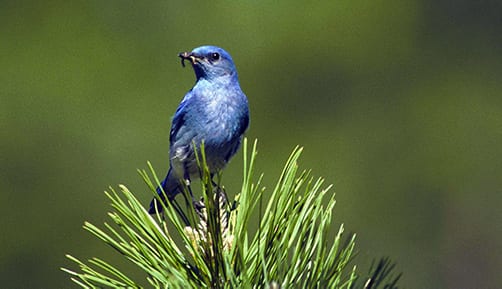
The University of Michigan Museum of Art catalogue entry for “Two Birds on Tree Branch” (object 1990.1.204) describes how paired or grouped birds on a bough in this tradition function as visual shorthand for tranquility and the passing of time. Not a coded message. An invitation to notice that the present moment is moving through you, and that it is worth noticing while it is here.
Three birds on a branch, in this reading, would carry something like: seasonal harmony, social ease, the ordinary pleasures that tend to be invisible until they are gone. That is not a small meaning. It may be the most useful one.
What Does Korean Magpie Folklore Say When a Bird Visits Near Your Home?
In Joseon-period Korea, if you heard a magpie calling from a branch near your house in the morning, someone was coming. A guest. A letter. Good news traveling toward you.
The kkachi (magpie) in Korean folk belief is the news-bird. Joseon-period minhwa folk paintings regularly depict magpies in trees calling down to tigers, the tiger earthbound and powerful, the magpie aloft and in communication with a wider world. Choi Sunu documents this in Folk Painting of Korea (1974): the magpie signals “joyful tidings, arrivals, or welcome guests.” The Horniman Museum’s bird-lore feature corroborates this, noting that in Korean tradition the magpie is “thought to bring good news,” particularly when seen near the home.
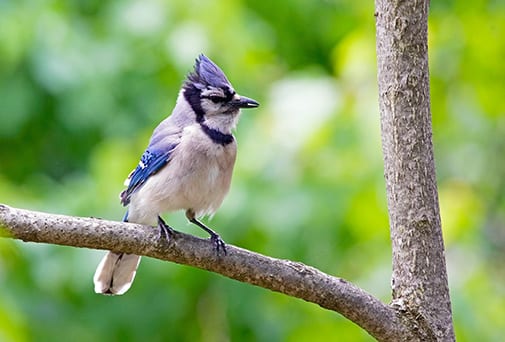
Multiple magpies intensify the expectation. Three magpies on a branch in that tradition would typically be read as news of a social nature, a celebration, a reunion, something communal and welcome. Not a spiritual omen in the Western sense. More like: the world is leaning toward you today.
I find this reading oddly practical. The magpie’s call is genuinely arresting; it does sound like an announcement. The folk belief maps directly onto observed behavior, which is what good symbolism tends to do.
What Does Western Christian Iconography Say About Birds as Spiritual Visitors?
In Western Christian art, birds near the body of Christ or in Paradise scenes are almost always souls. Not messengers. Souls. James Hall, in Dictionary of Subjects and Symbols in Art (1996), notes that groups of three identical objects in Christian iconography “often indicate the Trinity where no other explanation is apparent.” Three birds on a branch in devotional art could carry Trinitarian resonance, but more commonly small birds in trees around Crucifixion or Paradise scenes represent redeemed souls held in a state of protection.
Gertrud Schiller, in Iconography of Christian Art, vol. I (1971), observes that clusters of small birds in trees around these scenes “represent redeemed souls enjoying divine protection.” Not numerologically coded personal messages. Not signs pointing to specific deceased individuals. A general visual statement that the soul is held.

The single dove carrying the Holy Spirit is a different image with a different function. The flock of small birds in the tree behind the cross is something older and less doctrinal; it pulls from pre-Christian soul-bird imagery and was absorbed into Christian visual vocabulary because it was already there, already understood. So three birds on a branch, in this tradition: completeness, the soul in its proper place.
What Do the Words “Omen,” “Messenger,” and “Threshold” Actually Mean in Bird Symbolism?
These three words are doing a lot of work in contemporary spiritual writing about birds, and they are not interchangeable. Worth being specific about where each comes from.
Omen comes from Latin omen, a prophetic sign, and was the technical vocabulary of Roman augury. Augurs read bird behavior, the direction of flight, the species, the number, the call, as indicators of divine favor or disfavor for public events. The key point: Roman augury was a civic and military practice, not a personal one. An augur wasn’t reading a bird for your love life. He was reading it to determine whether the army should march or the Senate should vote. The personal-omen use of the word is a modern adaptation, mostly from the nineteenth-century spiritualist tradition.
Messenger comes from Greek angelos, literally “one who carries a message,” and was applied to birds in later Christian devotion partly because the word was already associated with beings that crossed between divine and human realms. Scripture does not equate small perching birds with angels; that conflation is post-biblical folk Christianity, and it is widespread.
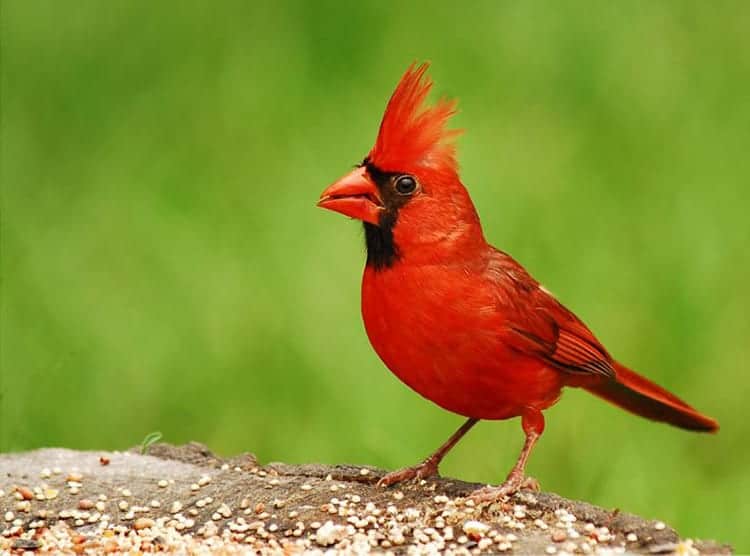
Threshold in bird symbolism draws on Indo-European world-tree mythology, in which birds at the crown of the cosmic tree mediate between the world of the living and the world of the dead. The word “threshold” applied to a bird encounter is modern New Age language layered over that older motif. And the older motif is genuinely interesting on its own terms. The world-tree bird is not delivering a message. It is sitting at the point where categories break down. That is a stranger and more accurate description of what many people feel when a bird appears at an unusual moment and stays.
I am not sure the contemporary vocabulary does the older traditions justice. “Threshold” is the most honest of the three words, if you strip the rest away from it.
What Does Natural Science Say About Why Birds Visit and Perch Near Humans?
The behavioral ecology answer and the symbolic answer are not in competition. This is something I had to work out for myself over years at the wildlife center, and I still find it worth saying plainly.
Small perching birds form foraging parties and rotate sentinel duties. One bird watches while others eat, then they switch. S. Lima, in “Collective Detection of Predators and the Social Monitoring System” (American Zoologist, 1994), showed that group foraging in passerines enhances predator detection precisely because individuals share the vigilance load. Three birds on a branch near your house may simply be a foraging party using an elevated perch for surveillance of the surrounding area, which is what elevated perches are for.
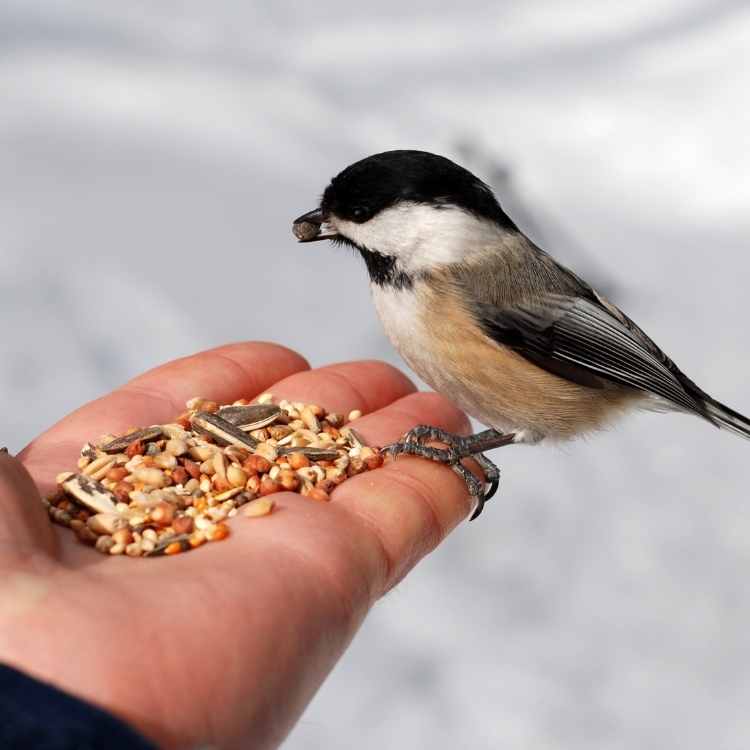
According to the National Wildlife Federation’s overview of bird behavior myths, many people misread territorial and foraging behaviors as directed at them personally. A bird returning to the same window is defending territory against its own reflection, not delivering a weekly message. The Cornell Lab of Ornithology’s Birds of the World entry for the House Sparrow (Passer domesticus) notes stable winter flocks of ten to twenty individuals using consistent communal roost sites, which means the same small group returns to the same branch repeatedly because that is their home range.
And none of that cancels the other question. Knowing why a bird is physically present does not resolve what the mind does with the encounter, or what that mental event means. These are different questions. Both are worth asking.
What Does It Mean When a Specific Bird Visits You?
The species matters. A lot. Generic “bird symbolism” collapses distinctions that the traditions themselves kept carefully separate.
A crow in most Western European folk traditions is a threshold creature, associated with the boundary between the living and the dead, not because crows are sinister but because crows are omnivores that frequent both active habitats and carrion sites, and humans noticed. See the full treatment at crow symbolism.
A sparrow appears in Matthew 10:29 (“Are not two sparrows sold for a penny? Yet not one of them will fall to the ground apart from your Father”) as a figure of providential care precisely because sparrows are common, small, and apparently inconsequential. Their symbolic weight in Christian tradition is exactly their ordinariness. The Cornell Lab of Ornithology’s Birds of the World entry for House Sparrow documents their year-round association with human settlement. They evolved alongside us, essentially. That closeness is the source of the symbolism.
A robin in English and Irish folk tradition carries the soul of a recently dead person, a belief documented in the sixteenth century and still current in rural areas. See robin symbolism for the documented tradition.
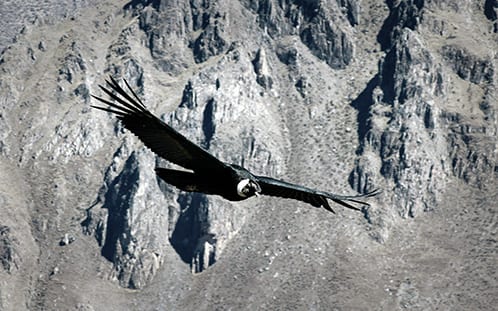
A dove in nearly every tradition I have traced carries peace or the soul in transit. Dove symbolism and mourning dove symbolism cover these separately because their symbolic registers differ.
An owl is the bird I know best. In many traditions it signals death or transition; in others it signals wisdom; the two readings are not as different as they appear, since both emerge from the owl’s actual behavioral profile, nocturnal, silent, predatory, present at the edge of perception. Full reading at owl meaning.
A magpie varies dramatically by culture. One magpie is sorrow in English folk rhyme; one magpie on a branch near your Korean grandmother’s house is good news arriving. See magpie symbolism.
The symbolism is not arbitrary. It maps directly onto observed behavior, in every case where I can verify the folk tradition against actual natural history records.
What Does It Mean When a Bird Visits You in a Dream?
Dream visitations and waking encounters are related but not identical in the folk record, and conflating them produces readings that don’t quite fit either experience.
In Jungian psychology, birds in dreams frequently appear as aspects of the psyche in motion, specifically the anima or animus in flight, seeking expression. Jung wrote in Memories, Dreams, Reflections (1962) about the bird as a symbol of the liberated or threatened soul, and I read that as psychological description rather than metaphysics. The bird in your dream may be the part of yourself that is trying to cross a threshold your waking mind has been avoiding.
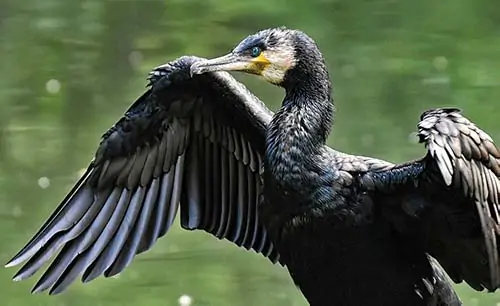
In folk traditions across the Middle East and North Africa, birds in dreams carry messages from the dead in a way that is more literal than Jungian interpretation allows for. Islamic dream interpretation, drawing on traditions documented by al-Nabulsi in the seventeenth century, reads a bird landing on your hand in a dream as a direct communication from a deceased relative. I don’t have the authority to confirm or dispute that framework; I report it because it is specific and documented.
For a full treatment of bird dreams, including the specific meaning of dead birds, flying birds, and birds entering your home in dreams, see dreaming of birds.
What Does It Mean When a Bird Visits You After Someone Dies?
This is the question under the question, for many people who end up on this page. I know that because I’ve been on the other side of it.
The soul-as-bird motif is the oldest and most geographically consistent layer of bird symbolism in the human record. Egyptian ba-birds. The Gaelic tradition of the soul departing in the form of a wren. English robin-as-soul folk belief documented continuously from at least the sixteenth century. The Norse belief that the dead traveled as crows. These are not the same tradition. They developed independently. But they kept arriving at the same image, which suggests that the image maps onto something real in human experience, even if what it maps onto is the mind’s own need to locate the lost person somewhere.

I don’t believe in messages from the dead. I do believe that the mind, in grief, reaches for animals as mirrors, and that the reaching tells the truth about the grief even when the bird is just a bird. Those two things can both be true. They were both true for me, in the years after 2011, and I spent a long time being uncomfortable with that before I stopped.
Frequently Asked Questions
What does it mean when a bird lands on you?
Physical contact, a bird landing on your hand or shoulder, is read in most folk traditions as the most direct form of threshold crossing possible. In Joseon-period Korean belief, documented by Choi Sunu in Folk Painting of Korea (1974), a bird landing on a person signals direct communication, usually positive. In Western folk Christianity, it is sometimes read as a soul making direct contact. Behaviorally, a wild bird that lands on a person is usually either habituated to humans from hand-feeding or disoriented by illness. Both explanations are worth checking before settling on the symbolic one.
Is a bird visiting your window a good or bad sign?
In most regional English and Irish folk traditions, a bird striking or repeatedly visiting a window is read as a warning. Something is trying to cross a threshold and cannot. The species matters significantly. A robin at the window in English folk belief carries a different weight than a crow. I don’t read window visits as uniformly ominous; the crow at the window is more unsettling than the blue tit, and the folk record agrees with that instinct. If you’re looking for the specific encounter reading, the bird in house meaning article covers window strikes and entries separately.
What does it mean when a bird follows you?
A bird following you on a walk is almost always a territorial escort. The bird is moving you through and out of its territory, which is what territorial birds do. Some species, like the Australian Magpie during nesting season, will follow and dive-bomb humans over distances of several hundred meters. The symbolic reading in most traditions I can trace: you are being watched, and the watching is intentional. Whether the watcher is friendly depends on the tradition. In Celtic folk belief, a bird following at a distance is a guide; in Roman augury, an escort-bird was read as directional, pointing you somewhere.
Which birds are considered the most spiritually significant visitors?
The robin, the crow, the owl, the wren, the dove, and the eagle appear across the largest number of named traditions with consistent symbolic weight. The robin’s soul-association is documented continuously in English regional folklore from at least the sixteenth century. The owl’s threshold role appears in Welsh, Greek, Roman, and numerous indigenous North American traditions independently. The dove’s peace-and-soul reading is cross-cultural to a degree no other species matches. The wren is underrated in this company; its symbolic density in Irish and Welsh tradition is out of all proportion to its size, which is part of the point.
Does the color of the visiting bird change its meaning?
Yes, significantly. White birds in most Western traditions carry soul or purity meanings: the white dove, the white egret, the albino sparrow. Black birds carry threshold and death-adjacent meanings in Western Europe but carry luck and news in Korean and some Chinese regional traditions. A red bird, particularly the Northern Cardinal, carries life-force meanings in a number of contemporary American folk frameworks. For color-specific readings, the color-meanings.com guide to bird color symbolism covers the major associations by hue, though I’d treat the cultural attributions there as a starting point. Some of them conflate traditions that don’t belong together.
What does it mean when a bird sings outside your window in the morning?
Behaviorally: the bird is establishing or defending a territory using the dawn chorus, which is when most passerines sing most intensively because sound carries further in still morning air. A 2018 study using automated acoustic monitoring documented in Haikubox’s bird culture survey found that dawn singing in song sparrows begins reliably 45 minutes before sunrise. Symbolically, morning birdsong at your window in English, German, and Irish regional sources is almost uniformly positive: news arriving, a good day beginning, a protective presence. My grandmother Theresa’s notebook records a Bavarian version of this: the bird singing before light means the house is being watched over.
Are three birds on a branch a special omen?
In medieval Welsh tradition, yes. Three birds in a tree invoke the triadic structure that, in the Trioedd Ynys Prydein, marks a threshold or uncanny event requiring attention. In Edo-period Japanese kacho-ga painting, three birds on a branch is primarily a compositional choice carrying auspiciousness and seasonal harmony, not a numbered omen. In Western Christian iconography, three matching creatures hint at Trinitarian completeness. So the answer depends entirely on which tradition you ask, which is true of almost everything in this subject. I don’t think there is a tradition-neutral reading of the number three that applies across all of them.
What is the difference between a bird as a spirit animal and a bird as a messenger?
A spirit animal or totem in indigenous North American frameworks is a relational being; the relationship is ongoing, reciprocal, and personal. A messenger in Roman augury or Christian folk tradition is a one-directional vehicle: it brings something from elsewhere and the encounter ends. These are structurally different relationships. The spirit-animal framework asks what this animal is teaching you over time. The messenger framework asks what this specific appearance is communicating, right now, once. Both are legitimate questions, but they’re not the same question, and conflating them produces readings that don’t quite fit either.
What does it mean when a bird visits you and stares at you?
Birds use direct eye contact as a threat assessment behavior. A bird that holds eye contact with you is evaluating you as a potential threat or a potential food source; it has decided you are not going to move suddenly. That is actually a kind of trust, in behavioral terms. Symbolically, in the traditions I have been able to trace, a bird that holds your gaze is almost always read as the encounter being intentional. The bird is not passing through; it is attending. Welsh tradition in particular emphasizes the directed gaze of a bird as the sign that a threshold moment is active. I find that reading consistent with what actually happens when a wild animal chooses to look at you directly and stay.
Do different spiritual traditions agree on what a bird visit means?
Not exactly. Welsh tradition reads it as a threshold marker; Korean tradition reads it as good news arriving; Christian iconography reads it as soul-protection; Roman augury read it as directional information about events. What they agree on is that a bird visit is not nothing. Every tradition I have found treats bird encounters as meaningful rather than incidental. The content of the meaning varies widely. That unanimity about significance, with divergence about content, is itself worth noting: it suggests the human mind reliably reaches for birds at moments of transition, and that the reaching is worth taking seriously regardless of which specific content you assign to it.
Sources
- Horniman Museum and Gardens, “Birds: Myth, Lore and Legend” (online, c. 2018)
- University of Michigan Museum of Art, “Two Birds on Tree Branch,” catalogue object 1990.1.204
- Haikubox, “Birds in Art, Culture and Folklore”
- National Wildlife Federation, “10 Myths About Bird Behavior,” National Wildlife Magazine (2010)
- Color Meanings, “Bird Colors and Their Symbolic Meanings”
- FeatherSnapCam, “Bird Symbolism in Different Cultures”
- Urban Bird Project, “On the Cultural Significance of Birds: Biocultural Conservation” (2025)
- Sioned Davies, The Mabinogion (Oxford University Press, 2007)
- Miyeko Murase, Birds and Flowers of the Four Seasons (Metropolitan Museum of Art, 1979)
- Choi Sunu, Folk Painting of Korea (1974)
- James Hall, Dictionary of Subjects and Symbols in Art (1996)
- Gertrud Schiller, Iconography of Christian Art, vol. I (1971)
- S. Lima, “Collective Detection of Predators and the Social Monitoring System,” American Zoologist (1994)

There are a lot of bird symbolism covered. I was thrilled with owl symbolism as it’s one of my favorites. But there was one I was hoping to find because it’s fascinating & underrated in my opinion: the skua birds. I assume they aren’t covered because there is not symbolism attached to them specifically besides the general symbolism of freedom all birds seem associated with.
In the last three months I’ve seen three baby birds that have fallen from their nest and I don’t know what to make of it.
Wow, thank you for a fantastic blog. I’ve bookmarked this website in the hopes of spending more time reading this article again.
Hey there,
I just finished reading your article on bird symbolism, and I must say, it was truly captivating! As someone who has always been fascinated by the hidden meanings behind our interactions with nature, your exploration of the spiritual significance of our feathered friends was both enlightening and thought-provoking.
Your ability to delve into the diverse cultural and historical interpretations of bird symbolism was truly impressive. I was particularly intrigued by your discussion on the association of birds with freedom and liberation in various belief systems and mythologies. It made me reflect on how, in our fast-paced modern world, we often overlook the profound messages nature has to offer us.
Moreover, I appreciated how you highlighted the importance of paying attention to the specific type of bird that crosses our path, as each species carries its own unique symbolism and message. Your examples of the owl representing wisdom and the hummingbird symbolizing joy resonated deeply with me. It reminded me to remain open to the subtle signs and messages that the universe sends our way, even in the form of a simple encounter with a feathered companion.
Overall, your article not only expanded my understanding of bird symbolism but also reminded me of the interconnectedness of all living beings. It was a pleasure to read your well-researched and beautifully written piece. Thank you for sharing your knowledge and insights with us. I look forward to exploring more of your work in the future!
Hey there,
Wow, your response to my bird symbolism article really ruffled my feathers—in a good way, of course! Your comment sounds a bit like GPT but that does not matter!