
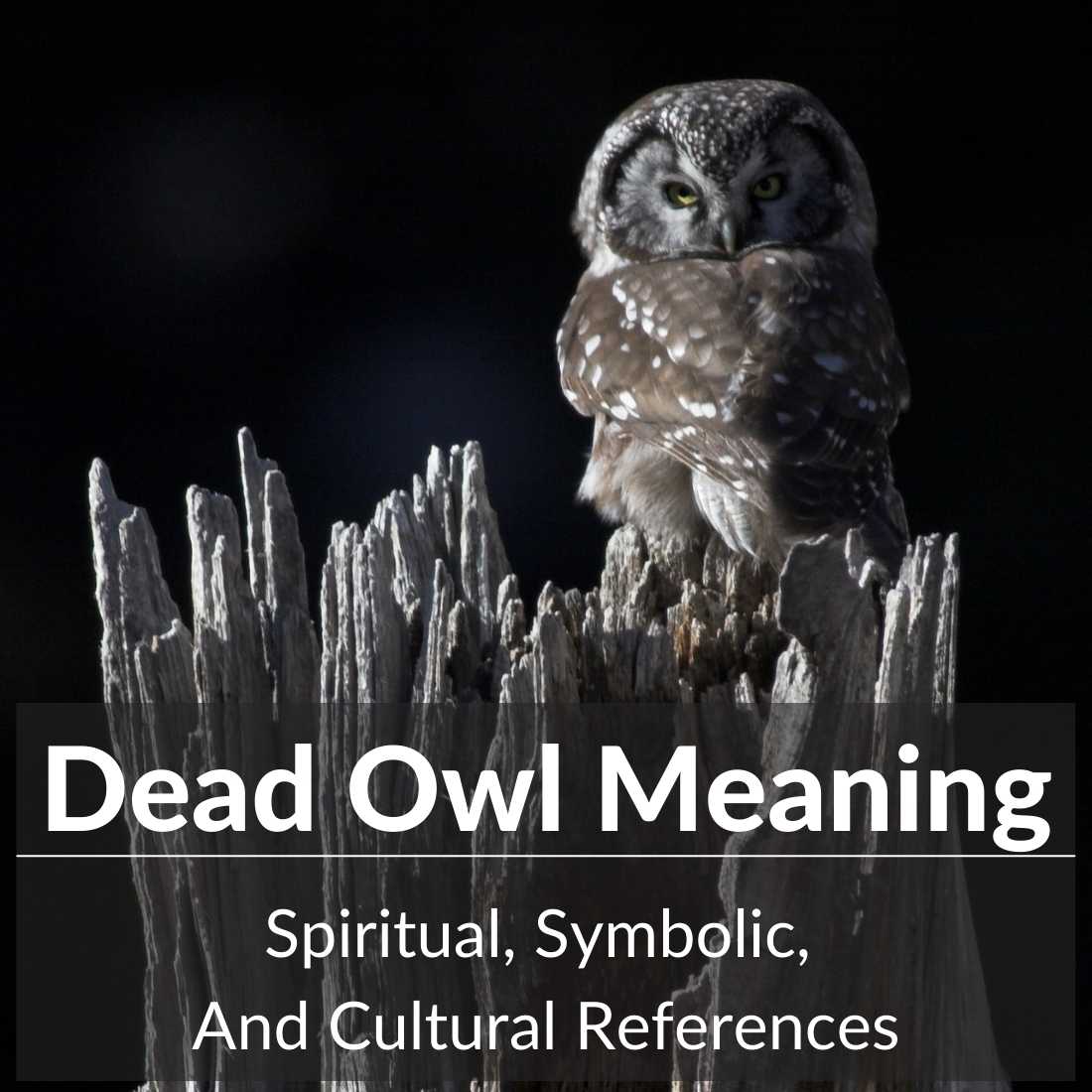
You found it on the step and your stomach dropped. In James Mooney’s 1900 Cherokee documentation, owl and witch shared a linguistic root – a dead one meant a dangerous force was stopped. But a dead owl in the road reads differently than one on your threshold, and almost no one checks which tradition applies.
Key Takeaways
- No single fixed meaning exists across cultures. The traditions disagree, sometimes sharply.
- Most historical folk records focus on the living owl’s cry as the death omen. The dead body is a different category entirely.
- Where the dead owl body does appear in older records, it functions as an apotropaic object, something used to ward off harm, or as evidence that something dangerous has been neutralized. Not a gentle sign of change.
- Location adds context, but does not override the ambiguity.
- The “dead owl means positive transformation” reading is recent. I have not found it in any ethnographic source predating the 1990s.
What Does It Mean When You Find a Dead Owl?
The honest answer is: it depends on which tradition you ask, and most traditions spent considerably more time worrying about the living owl than the dead one. Take a breath. The folk record on this is genuinely mixed, and anyone who gives you a single confident verdict about owl superstitions is working from a very narrow slice of it.
What I can tell you is that the dead owl body, when it appears in older records at all, tends to fall into one of two categories: something ritually dangerous that requires careful handling, or something used deliberately to absorb or deflect harm. Neither of those is “a sign that your life is about to transform beautifully.” That reading exists, and I understand why it’s appealing, but it’s a modern construction. The older material is harder and stranger and, I think, more interesting.
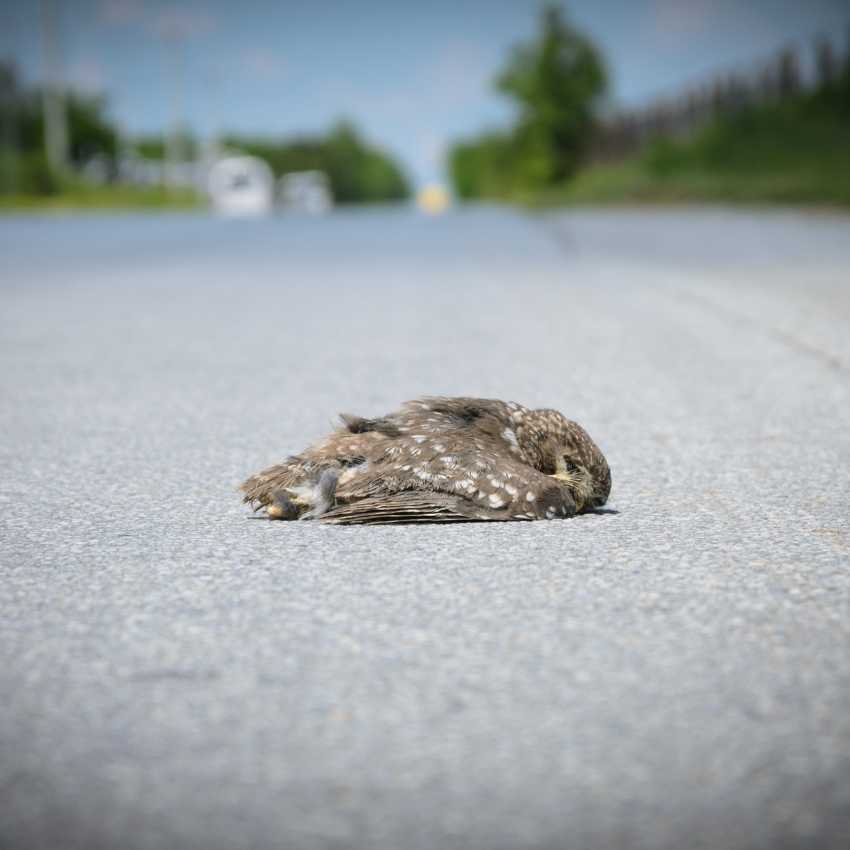
I write about owls from a particular position. I’ve volunteered in raptor rehabilitation at a local wildlife center for years, and I’ve handled dead owls before the question of what they mean ever occurred to me. A dead owl is, practically speaking, a small body that needs to be reported and disposed of carefully. That is not the whole story. But it is the beginning of one.
What Did Ancient Greek and Roman Traditions Say About Dead Owls?
Athens and Rome did not agree on owls, which is worth knowing before you accept any tidy summary of “classical tradition.”
In Athens, the Little Owl, Athene noctua, was Athena’s bird. An owl on the battlefield meant the goddess was present. The phrase “an owl to Athens”, meaning to bring something to the place that already has plenty of it, tells you how thoroughly the bird was woven into Athenian identity. Auspicious. Protective. The owl on the silver tetradrachm coin is not a death omen; it’s a civic emblem.
Rome read the same animal differently. Roman authors including Pliny the Elder treated the appearance of an owl within city limits as a dire prodigy requiring public expiation. Pliny records, in his first-century Natural History, that Romans would catch owls that entered the city, kill them, and nail the dead body to the door as an apotropaic act. The corpse absorbed whatever harm the living bird had brought with it, pinned in place at the threshold.
So the dead owl on the doorstep, in this tradition, is not an omen you receive. It’s a remedy someone enacted. That reframe may or may not comfort you, but it’s what the older record actually says.
What Do Cherokee and Southeastern Nations Say About Owls and Death?
This is where the folk record gets specific in ways that need to be named carefully. I am not Cherokee, and I write about these traditions as an outside observer who has read the scholarship and corresponded with colleagues who know this material better than I do. But the record is too important to skip.
The Cherokee association between owls and witchcraft is structural, not incidental. The Great Horned Owl and the word for “witch” share the same root in Cherokee, as James Mooney documented in his 1900 ethnographic record. An owl calling near the house was understood as a witch circling, or as a direct death announcement. The Choctaw distinguished between species by the kind of death each one predicted: a Great Horned Owl’s call meant sudden death; a Screech Owl foretold a child’s death; a Barred Owl signaled the loss of a relative. Creek and Chickasaw traditions held that witches could take owl form to travel at night and cause harm.
In a system like that, a dead owl found near the house reads one of two ways: either something dangerous has been stopped, or the stopping of it has left a residue that requires attention. Neither reading is catastrophic. But neither is it soft. If the encounter felt like more than an ordinary bird death, the tradition agrees with you that it is more.
What to do in the Cherokee tradition, practically speaking: consult someone within the tradition. I am not the right person to prescribe Cherokee ritual response, and no website should be.
How Did Plains Warrior Traditions Use Owl Remains Ritually?
The Lakota, Cheyenne, Fox, Iowa, Ojibwe, and Menominee nations each held their own relationships with owl remains, and the Buffalo Bill Center of the West in Cody, Wyoming has published a careful synthesis in their essay “Native Americans and Owls.”
In Plains warrior traditions, owl feathers, owl skins, and sometimes whole owl bundles were carried as active ritual objects, chosen for their power of silent movement and night vision. The Cheyenne held that only the Short-eared Owl was a “real bird.” All other owls were spirits of the night. Cheyenne dog soldiers wore owl feathers. Some warriors kept owl skin bundles.
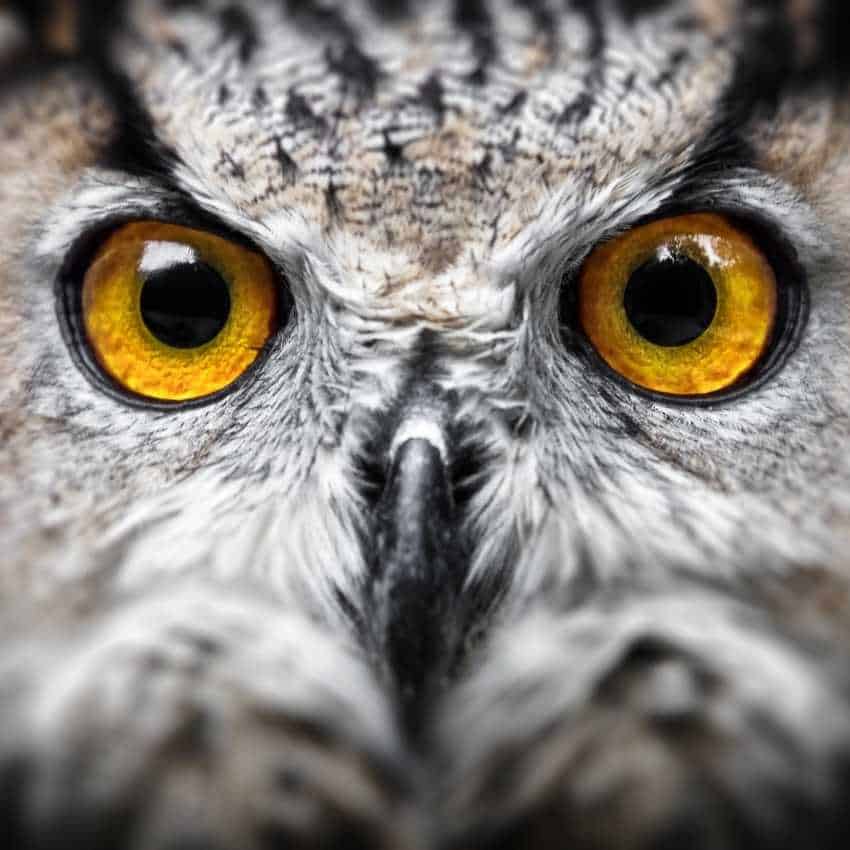
None of this is a spontaneous omen. It’s deliberate practice, undertaken by people who knew exactly what they were doing and why. Finding a dead owl in your yard is not the same thing as a warrior constructing a sacred bundle. The distance between those two acts is the distance between reading about surgery and performing it. I say this not to diminish your experience but to be honest about what the ethnographic record actually describes.
And a practical note here: Great Horned Owls have one of the widest geographic ranges of any North American raptor, breeding in all 49 continental states. They die near human structures because we have built roads, windows, and power lines across their habitat. That is not a dismissal of the encounter. It is context.
Does the Location Where You Found the Dead Owl Change Its Meaning?
Yes, in the traditions that pay attention to location. Here is what the older frameworks suggest, mapped onto the settings people actually find them.
Doorstep or threshold. In the Roman apotropaic tradition, the threshold was exactly where the dead owl was placed to do its work. Something about the boundary between inside and outside made the body meaningful there. If you found one on your doorstep, the older reading is not “you are cursed” but closer to “the boundary has been marked.” Whether something dangerous was deflected or arrived, the threshold is the hinge.
In the yard, away from the house. Practical causes are more likely here: rodenticide in the food chain, a window strike on a neighbor’s house that the owl survived long enough to cross your property, a territorial fight. The tradition’s emphasis on threshold and doorstep does not map neatly onto the middle of the lawn.
On the road. Vehicle strikes kill tens of thousands of raptors annually in the United States. A dead owl on the road is, statistically, a road casualty. I am not saying that to be dismissive. The fact that you noticed it and felt something is itself worth examining, separate from whether the death was a sign or a collision.
Inside the house. This is rarer and the tradition does treat it differently. An owl inside the house, living or dead, in both Southeastern and Baganda (central Uganda) folk belief, reads as the most direct possible contact. If it died inside, the older records suggest getting it out and marking the threshold afterward. Salt at the door appears across multiple unrelated traditions. I don’t know why. But it does.
For more on how location shapes the meaning of dead bird encounters generally, the owl superstitions page covers the threshold symbolism in more depth.
Is a Dead Owl a Bad Omen, a Sign of Protection Ending, or Something Else?
The “protection ending” reading has some grounding. If owls were understood as guardians, and in the Athenian tradition, they were, then a dead owl near the house could read as a guardian lost. Not a bad omen exactly. More like a notification: something that was present is now absent, and you may want to pay attention to what comes next.
Frequently Asked Questions
Is finding a dead owl rare or common?
Rarer than finding other dead birds, but not as rare as people assume. Great Horned Owls, Barred Owls, and Eastern Screech-Owls all live near human structures across most of North America. Vehicle strikes, window collisions, and secondary rodenticide poisoning kill thousands of owls annually in the US. You’re more likely to find a dead songbird, but a dead owl is not a statistically improbable event. The rarity you feel is partly because owls are large and striking, and partly because we pay them a different kind of attention.
Does the species of owl change the meaning?
In the Choctaw tradition, yes: the Great Horned Owl, the Screech Owl, and the Barred Owl each foretold a different kind of death. In Roman tradition, the strix, a screech-owl variant, carried the heaviest ill omen. In Athens, it was the Little Owl specifically that was sacred to Athena. So species mattered to the traditions that thought carefully about this. I don’t have a confident answer for what species specificity means for someone finding an owl in their yard today. The folk record on that application is thin.
What does it mean if a dead owl is on your doorstep specifically?
The doorstep has the most direct traditional resonance. In Roman practice recorded by Pliny the Elder in his first-century Natural History, the threshold was where the dead owl was deliberately placed to do apotropaic work: to absorb misfortune at the boundary between inside and outside. Finding one there spontaneously maps onto the same symbolism. Something has arrived at your threshold. The tradition doesn’t tell you whether that is a warning or a clearing. Both readings exist, and I wouldn’t collapse them into one.
Is it bad luck to touch a dead owl?
In Southeastern tribal traditions, handling owl remains without proper ritual context was considered dangerous, and only certain people, medicine people and warriors with specific training, were meant to do so. For everyone else: use gloves. The Migratory Bird Treaty Act also means you cannot legally keep the bird or its feathers. If you touched it before you knew any of this, wash your hands and don’t panic. The spiritual caution in the tradition was about sustained contact and intent, not accidental touch.
What does it mean if you find a dead owl twice in a short period?
The cluster anxiety is real and the traditions notice it. Multiple owl encounters in the same location over days or weeks, in the Southeastern tribal framework, read as a sustained message rather than a single event. Something that requires a response, beyond mere acknowledgment. But practically, two dead owls in one yard in a week also suggests an environmental cause: rodenticide in the local food chain, a glass hazard, a territorial dispute. Investigate the practical cause. The two lines of inquiry are not mutually exclusive. Do both.
Do any traditions see a dead owl as purely positive?
Not that I have found in the older ethnographic record. The Athenian tradition is the closest: the Little Owl was Athena’s bird, associated with wisdom and protection, so a dead one near an Athenian home might have been read as the goddess withdrawing a blessing rather than sending punishment. Not positive, but not catastrophic either. The “positive transformation” reading that circulates widely is, as far as I can trace it, a modern reinterpretation. I find it in sources from the 1990s onward, not in Armstrong’s 1958 Folklore of Birds.
What is the legal status of keeping a dead owl or its feathers in the United States?
Illegal for civilians, with narrow exceptions. The Migratory Bird Treaty Act of 1918 covers all native owl species in the US. You cannot possess a dead owl, its feathers, talons, eggs, or nest without a federal permit. Permits go to federally licensed wildlife rehabilitators, museums, and certain Native American tribes for religious purposes. You can bury the bird on your property without retaining any part of it, or contact your state wildlife agency. Do not keep feathers because they are beautiful. The fine is real.
Sources
- US Bird History, “When Birds Mean Death” (synthesis of Southeastern tribal owl traditions)
- Buffalo Bill Center of the West, “Native Americans and Owls” (2018)
- Elisha McFarland, “The Owl: Wisdom or Death?” (2019)
- Kachina House, “Owl Symbolism in Hopi and Pueblo Kachina Tradition”
- Fish Forums community thread, “What does it mean when you see a dead owl?”
- MyLifeNote, “Owl Spiritual Meaning”
- Edward A. Armstrong, The Folklore of Birds (Collins, 1958), cited for European and world traditions; no direct URL available
- Pliny the Elder, Natural History (1st century CE), primary literary testimony on Roman apotropaic use of dead owls; public domain text available via Perseus Digital Library


I was walking my dog down the alley directly behind my house, i saw something an owl dead holding a crow that was also dead. is that some witch craft thing are something. Means something witch craft like. Some of these bird findings. sound like black magic. it was the most ironic thing i ever seen directly behind my house. Maybe the crow had some kind disease are something. Still seems like witch craft.
Hello, I Loved reading your articles! I just recently found a dead baby owl on my porch, and if something unusual happens, I always like to look it up, to see if it has some significant meaning… I was really intrigued by your articles! Keep up the great work! Love & Light _Ashley Hamby
Thanks Ashley, most appreciated