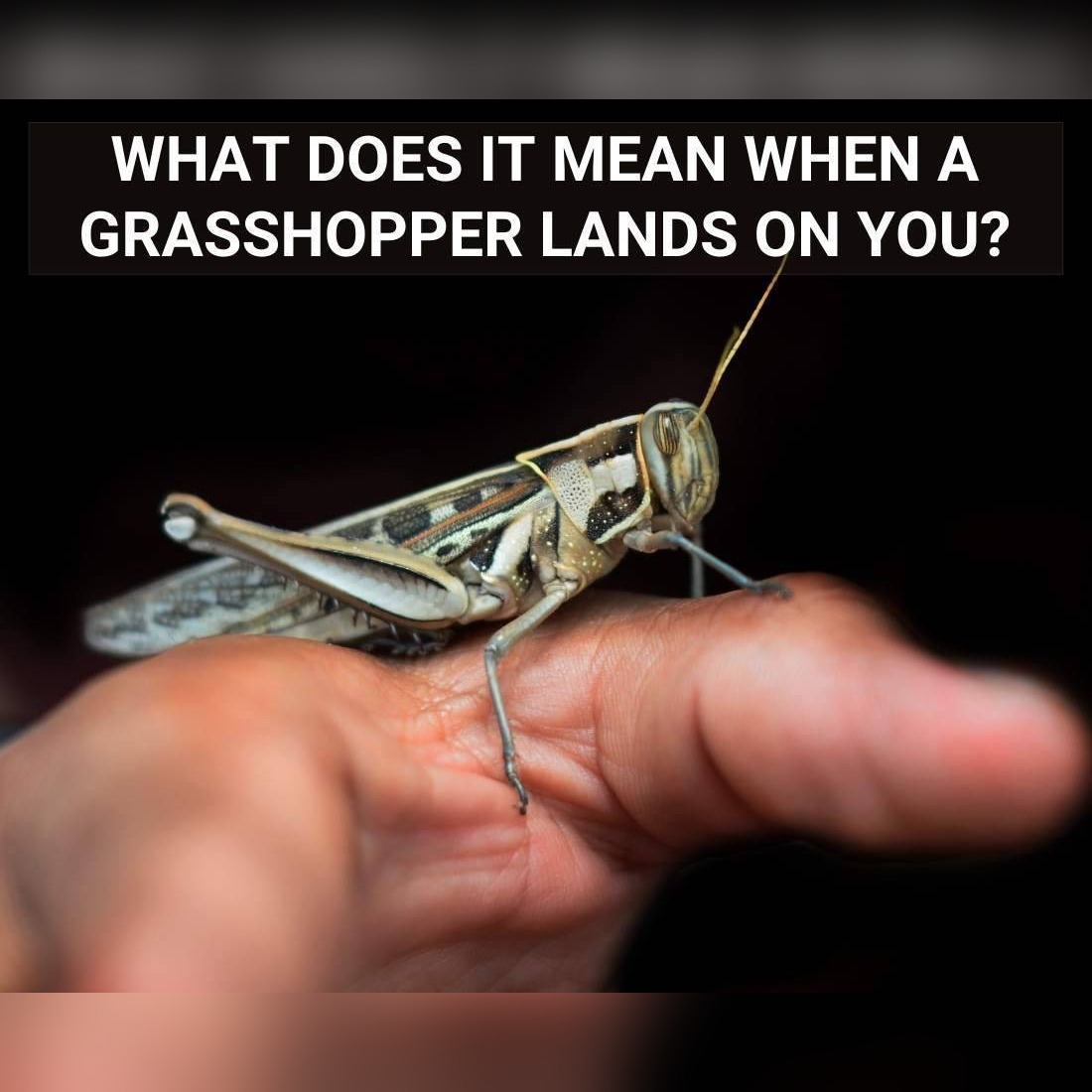
A grasshopper just landed on you and you want to know what it means. In most traditions, it signals an upcoming choice—not good or bad luck, but a sign to pay attention. Whether it stayed still, how long it sat, and your thoughts beforehand shift the reading. Notice what decision you’ve been postponing.
Key Takeaways
- A grasshopper landing on you is a threshold sign tied to choices and crossroads, not a blanket promise of good fortune.
- In Hopi oral tradition, the grasshopper is linked to both discipline and life-giving rain; the landing reads as either a call to account for broken commitments or a prompt to tend to what has gone dry.
- Biblical and Christian readings, rooted in the plague texts of Exodus and the book of Joel, treat the grasshopper as a miniature judgment sign, a nudge about neglected responsibilities or overconsumption.
- Color and landing location both refine the reading; weigh them against where you are in your life right now.
What Does It Mean When a Grasshopper Lands on You?
The short answer: you are at a threshold. Not a lucky one, not a dangerous one. Just a real one.
Grasshoppers jump. That is the whole of their defense strategy. They do not sting or bite in any meaningful way; they leap, and they leap forward, and they commit to the direction entirely. According to the University of Michigan’s BioKids species database, Acrididae grasshoppers can cover twenty times their body length in a single jump. That biological fact is not symbolism, but it is the reason the symbolism landed where it did across unrelated cultures. This is an animal that chooses a direction and goes.
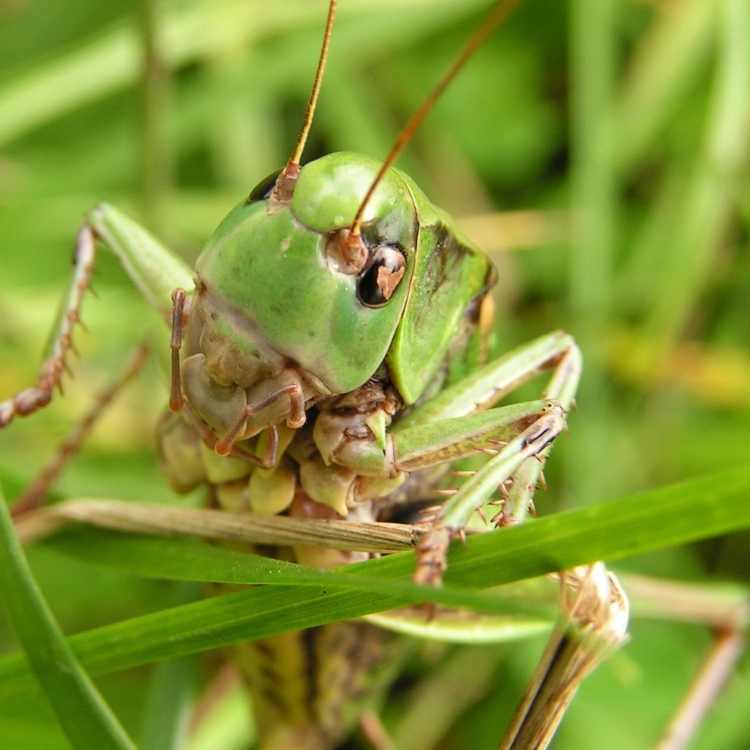
When one lands on you and stays, it has interrupted its own nature. It chose stillness. That is the thing worth sitting with.
For a broader look at what grasshoppers carry as a recurring symbol, the companion piece on grasshopper spiritual meaning covers the wider field. This article stays close to the specific encounter: it landed on you, and you want to know what to do with that.
Should You Be Worried or Reassured When a Grasshopper Lands on You?
Neither reaction is quite right, and I think that is actually worth saying directly.
The traditions with the most to say about this encounter do not frame it as good or bad. They frame it as a signal. Something requires your attention, and this is the form the signal took.
If you are in a period of genuine transition, a decision sitting unresolved, a relationship at a crossroads, a grief you have not quite named, most readings land on the affirming side. The grasshopper shows up at a threshold to confirm you are standing at one. For some people that is God working through creation. For others it is the universe, or something else words can’t quite hold. All of those feel like the same encounter described from different starting positions.
But if you have been avoiding something, neglecting something you know should not be neglected, the Hopi and biblical readings give this landing a sharper edge. Not threatening. Corrective.
You are not cursed. But you may be being asked a question.
What Do Hopi Traditions Say About a Grasshopper Landing on You?
The Native Languages of the Americas documentation of Hopi oral tradition records a specific disciplinary legend: grasshoppers bite the noses of children who disobey elders or violate community rules. The grasshopper in this story is not a random insect. It is an enforcer of social and moral order, arriving when a rule has been broken.
That is a harder reading than you will find on most symbolism sites, and I want to say it plainly. In Hopi understanding, a grasshopper landing on you could be read as a call to account. Something asking whether you have broken faith with a commitment, a person, or a principle you told yourself mattered.
But Hopi ceremonial life holds the grasshopper in a second register as well. The grasshopper Kachina appears in documented Hopi lore connected to rain, crops, and the sustaining of life. In this frame the landing is less a warning than a prompt: whatever has gone dry, whatever has needed watering, now is the time to tend to it.
The two readings are not contradictory. Discipline and nourishment tend to come from the same place.
What Do Biblical and Christian Traditions Say About a Grasshopper Landing on You?
The biblical record does not treat the grasshopper gently. In Exodus, locusts, swarming grasshopper species in the same family, are the eighth plague, stripping Egypt’s crops to nothing. In Joel, the locust army is a sign of judgment so complete that the prophet calls the whole nation to fasting and public lamentation. These are not gentle texts.
When adapted to a personal encounter, the Christian homiletic tradition carries that weight forward, scaled down. A grasshopper landing on you in this reading is a miniature version of the Joel prompt: what have you abandoned to waste? What abundance have you consumed without care? What is being stripped away, and what might that stripping be asking you to notice?
This is not the reading that pop spirituality usually offers for this encounter, which tends toward abundance and luck. But it is the older one. I find it more honest. The locust traditions know that sometimes the sign is not “you are doing great.” Sometimes it is “something needs to change.”
And that is not bad news. Warnings, when they arrive early enough, are a form of grace.
Does the Color of the Grasshopper Change the Meaning?
Yes, though I should say the color readings are less well-documented than the behavioral and cultural ones. The folk record moves fast and gets far from its sources. What follows is what I find consistent across it, with that caveat in place.
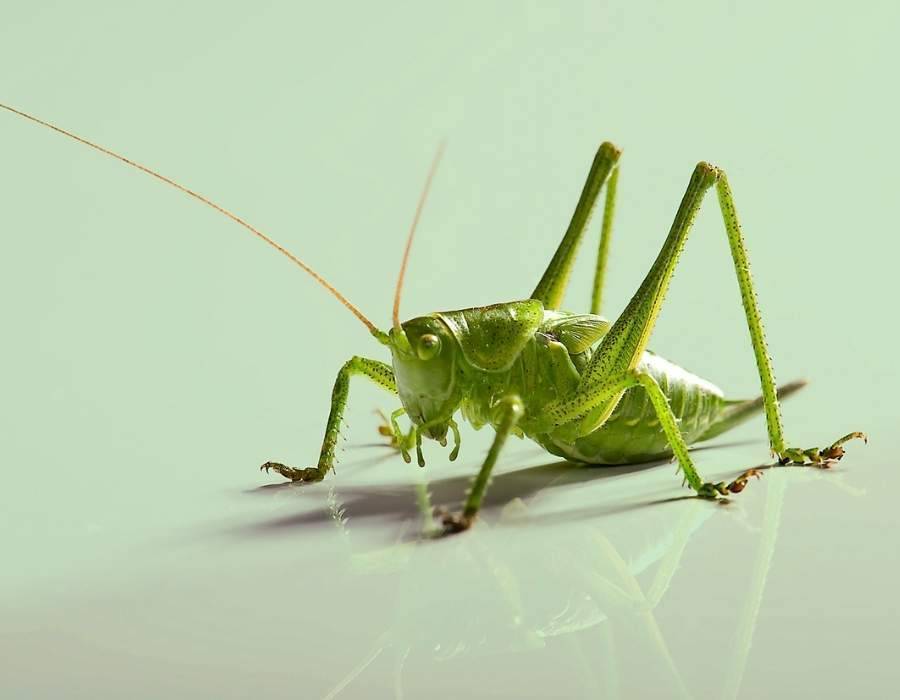
Green. The most common landing grasshopper. Green in nearly every tradition that uses color symbolism maps to growth and a go-signal. A green grasshopper landing during a decision reads as permission to move forward. You are ready.
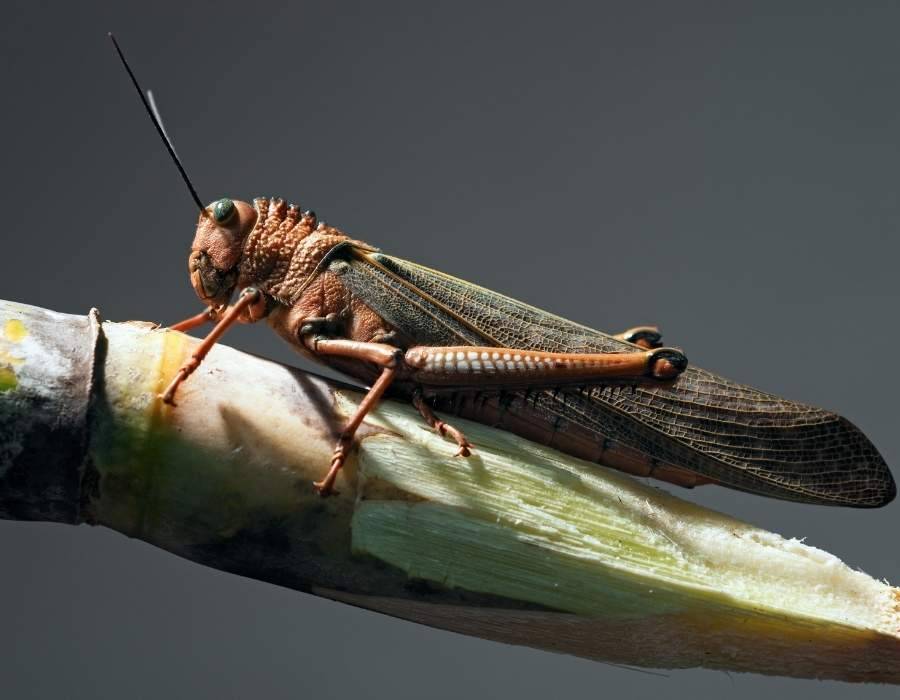
Brown. Grounding. Cautious. The brown grasshopper in folk symbolism tends to carry a steadier note: check your footing before the next jump. Not a warning against moving, but a warning against moving recklessly.
Yellow. Transition. Yellow grasshoppers appear in summer when the season is turning, and the color reading follows the biology. Something around you is changing, and the question is: are you paying attention before it changes without your input?
Read the color alongside the life context. A yellow grasshopper in a stable period reads differently than a yellow grasshopper the week after a loss.
Does It Matter Where on Your Body the Grasshopper Lands?
I think it does, though I should admit the folk record here is thinner than I would like. What follows is a reading built from the cross-cultural logic of body symbolism rather than a single documented tradition.
Hand. The hand makes things. A landing on the hand asks about what you are doing, what you are making or failing to make, what work is in front of you, what you are holding too tightly.
Shoulder. The shoulder carries weight. A landing there reads as either a burden being acknowledged or a guidance being offered, depending on where your life is running. If you have been carrying something heavy alone, the shoulder landing may be the most personal of all.

Head. Clarity. Decision. The head landing is the most direct: you are being asked to think clearly about something, not to feel your way through it.
Chest. Emotional life. A chest landing is the one I would take most seriously during a period of grief or love. Something in the emotional center is being asked about.
What Is the Grasshopper Asking You to Do Right Now?
My grandmother Theresa’s notebook from the Bavarian Forest doesn’t mention grasshoppers directly. But it records a logic that runs through all the animal entries: the encounter names something you already know but have not yet admitted. I think that holds here.
Across the Hopi, biblical, and cross-cultural folk readings, two questions surface consistently. You don’t have to answer both. But one of them probably fits.
What choice are you avoiding? The grasshopper jumps forward. It doesn’t hover. If you are sitting with an unchosen decision, a conversation, a commitment, a direction, the landing may be naming that avoidance directly.
What have you let slide? The Hopi discipline reading and the Joel warning both point here. Not self-punishment. Honest accounting. Something you said mattered and then let matter less.
And a third question, which is the one I find most useful: what season are you in, and are you acting like it? Grasshoppers are warm-season animals. They know exactly where they are in the year. The question is whether you do.
You are not making this up. The encounter is real, and the question it raises is worth more than a moment’s thought. Many people come to understand it as the beginning of something, not the sign itself, but the attention the sign called up.
Frequently Asked Questions
Is a grasshopper landing on you good luck or bad luck?
Neither category quite fits. The Native Languages of the Americas documentation of Hopi oral tradition treats the grasshopper as a figure of discipline, not luck. Chinese folk belief, particularly around rice-farming communities where the grasshopper’s relationship to crops is central, does lean toward abundance and good harvest. So the honest answer is: it depends on which tradition you’re working with and what’s happening in your life. I wouldn’t lead with luck in either direction.
What does it mean if a grasshopper lands on you more than once?
Once is an encounter. Twice in a short period starts to feel less random. By the third time, most people stop asking whether it means something and start asking what. I read repeated landings as the signal asking for more than a glance. Whatever question the first landing raised, it hasn’t been answered yet, and the grasshopper, symbolically speaking, is still waiting at the threshold.
What does it mean if a grasshopper lands on you and then jumps away immediately?
The jump is the whole of its nature. An immediate departure may mean the interruption was the message, the landing itself was the moment, and then the animal did what animals do. I wouldn’t read a fast exit as bad news. A grasshopper that stays for several minutes is unusual. One that lands and leaps is doing exactly what it does.
Is there a difference between a grasshopper landing on you indoors versus outdoors?
An indoor grasshopper is notable simply because it’s out of place. The same logic that governs most inside-outside animal encounters applies: a wild animal inside your home has crossed a boundary it doesn’t normally cross. That crossing tends to intensify whatever the species already carries. An indoor grasshopper landing on you is the same sign, louder.
What does it mean when a grasshopper lands on you during a difficult period in your life?
The timing matters more than people often realize. If you are in genuine difficulty, loss, transition, a decision with no clean answer, the threshold framing from both Hopi and biblical tradition points toward the same place: something is asking you to look squarely at what needs attention. Not to suffer more. Just to look. The grasshopper in hard times is not exactly comfort, but it is company. Something noticed you were at a threshold.
Do different spiritual backgrounds interpret this differently?
Significantly. For Christians working within the Exodus and Joel readings, the landing carries a note of accountability. For those in East Asian folk traditions, especially around rice-farming cultures where the grasshopper’s relationship to crops is direct and well-documented, the landing skews toward abundance and seasonal alignment. For those in nature-based spirituality, the forward-leap symbolism tends to dominate: a prompt to commit, to move. None of these readings contradict each other as much as they emphasize different aspects of the same animal.
What should you do after a grasshopper lands on you?
The most useful step I know: write down what you were thinking about in the ten minutes before the landing. Not because the grasshopper read your mind, but because the encounter marks a moment, and the thinking around that moment is the actual material. If you were avoiding a question, you now have it named. If you were mid-decision, you have a timestamp. The grasshopper has done its part. The rest is yours.
If you are seeing grasshoppers repeatedly, inside your home, in the same spot, several days running, the companion piece on grasshopper spiritual meaning covers that pattern in more depth. And if you are curious how this compares to other insects landing on you, the pieces on what it means when a butterfly lands on you and dragonfly landing meaning cover close ground.
Sources
- Native Languages of the Americas, Grasshopper Legends and Lore
- University of Michigan BioKids, Acrididae (Grasshopper) Species Information
- Khepera Wellness, Grasshopper Symbolism
- Our Spirit Animal, Grasshopper Meaning
- Wikipedia, Grasshopper (natural history and cultural notes)
- Richard Alois, Grasshopper Spiritual Meaning (companion reference)